


LIVE THE PRESENT WITH TRUST IN MINORITY AND JOY
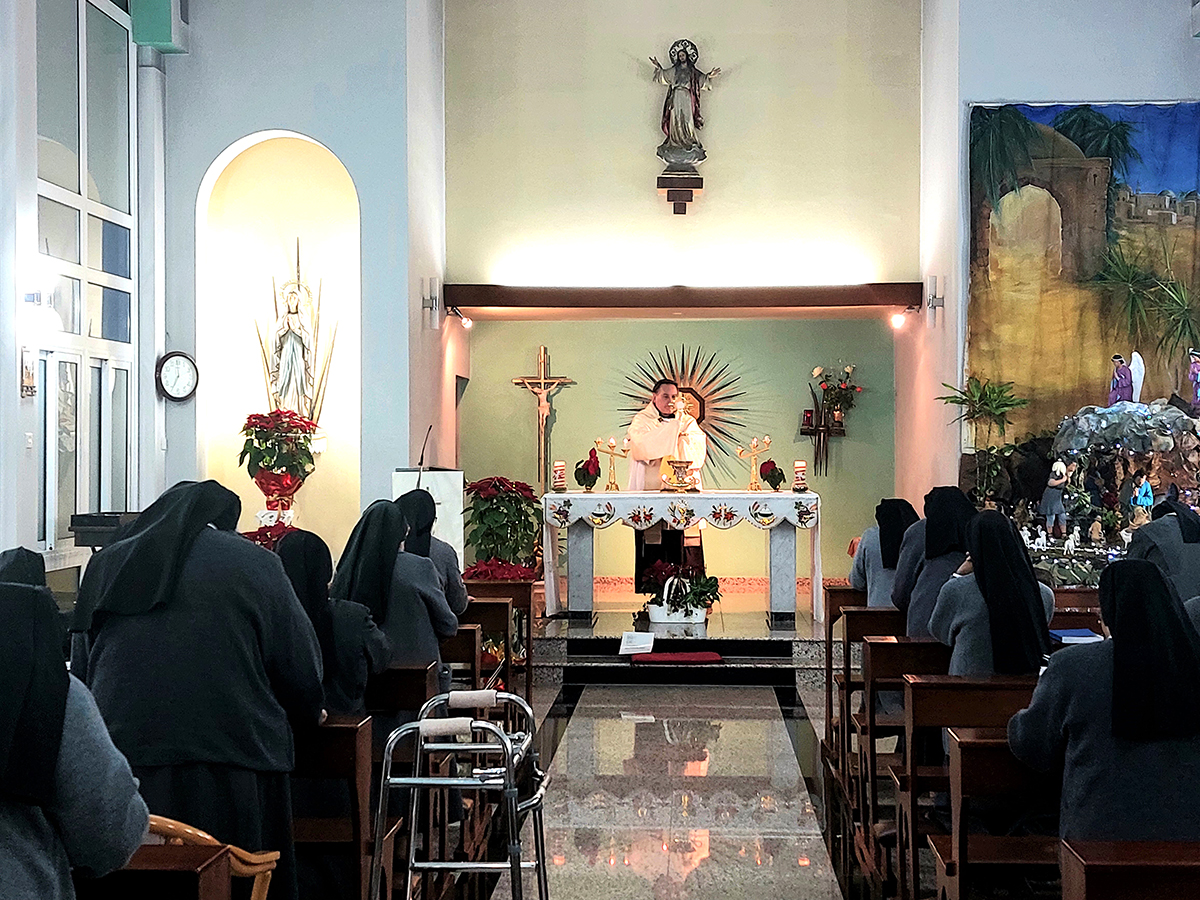
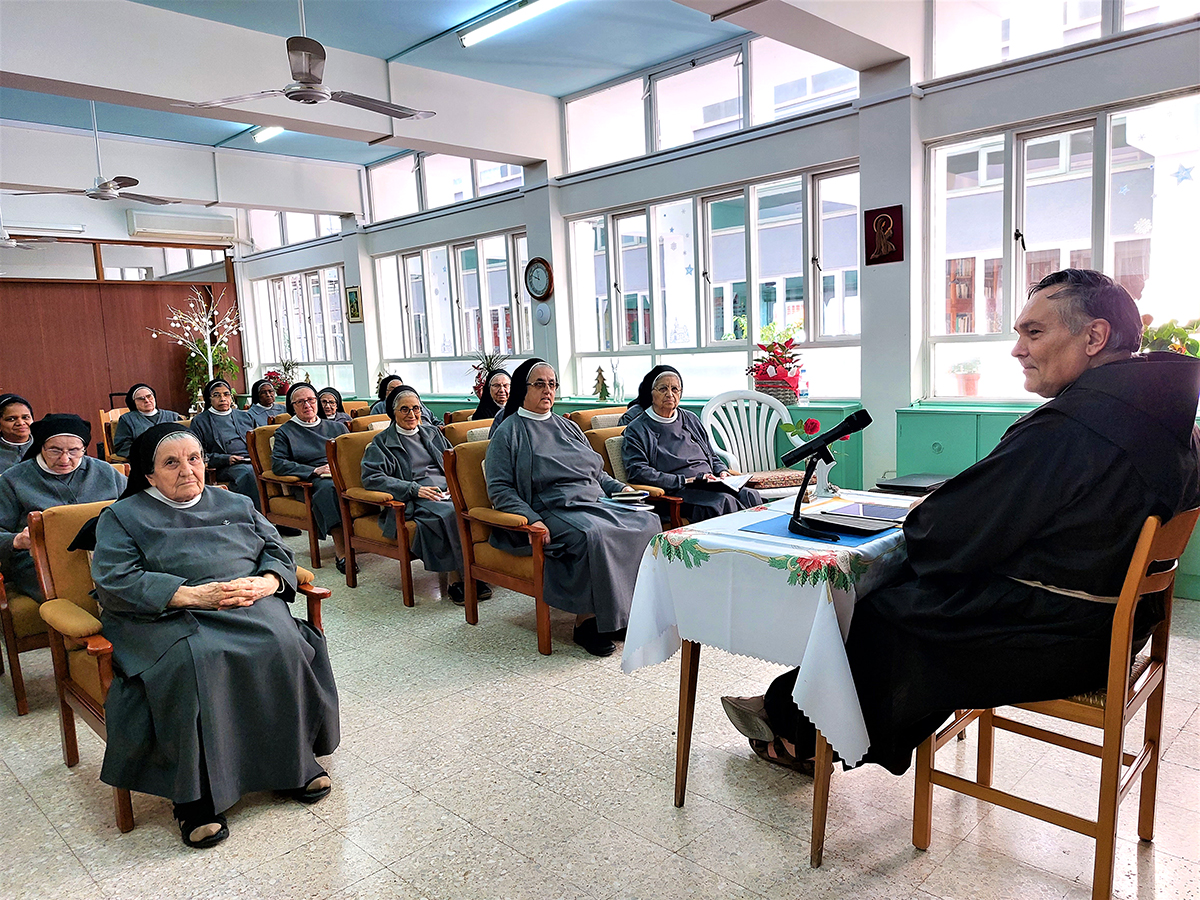
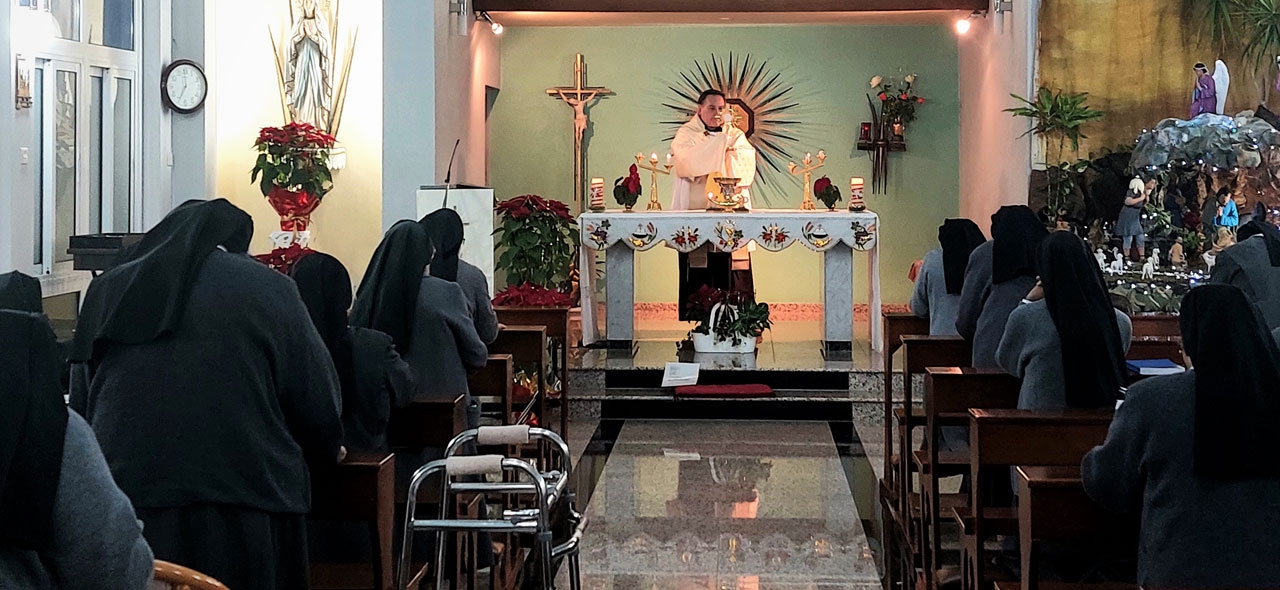
Who will ascend to the mountain of the Lord? Who can stand in his holy place? (cf. Psalm 23). The Spiritual Exercises that we lived in the Provincial House in Limassol from 3-7 January, together with the sisters of the various communities of the Province, were useful instruments and precious time of conversation with God, listening to His Word.
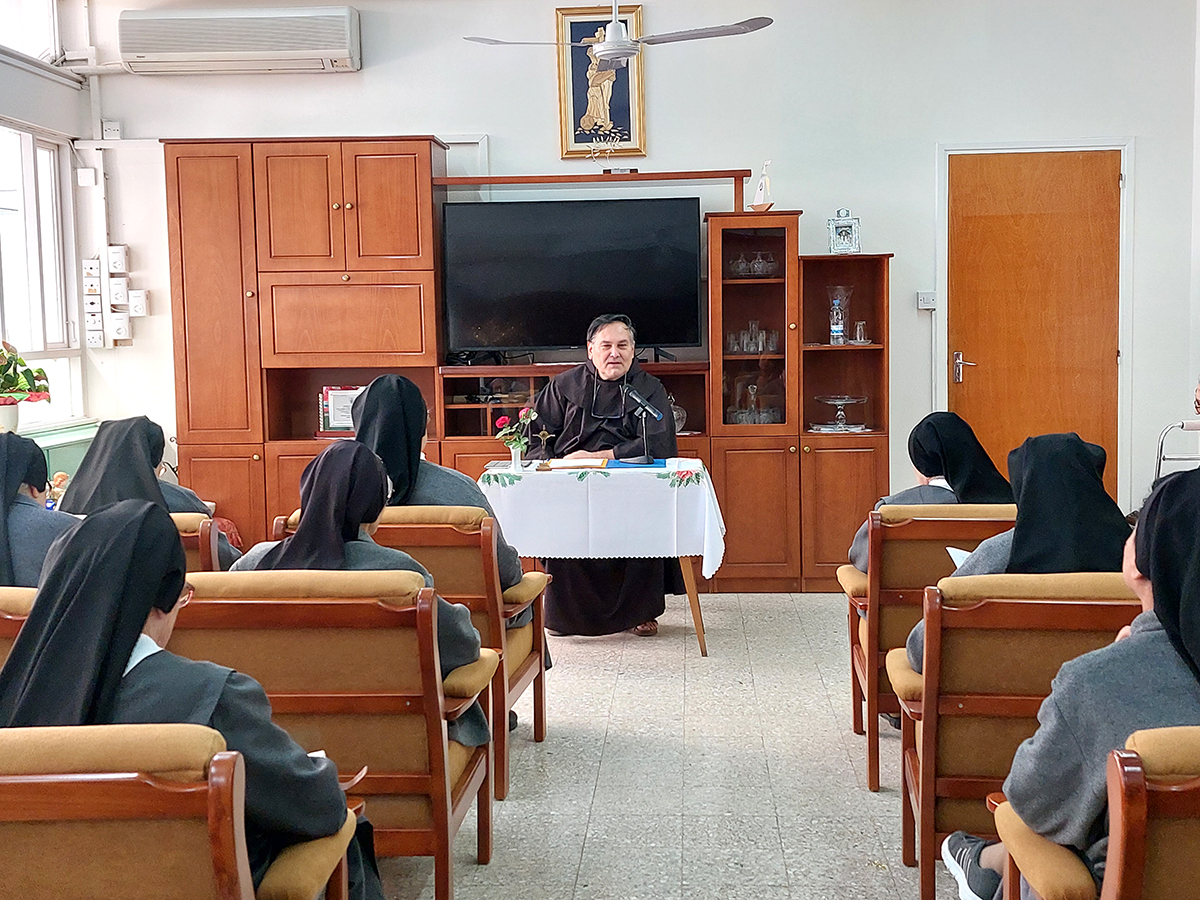
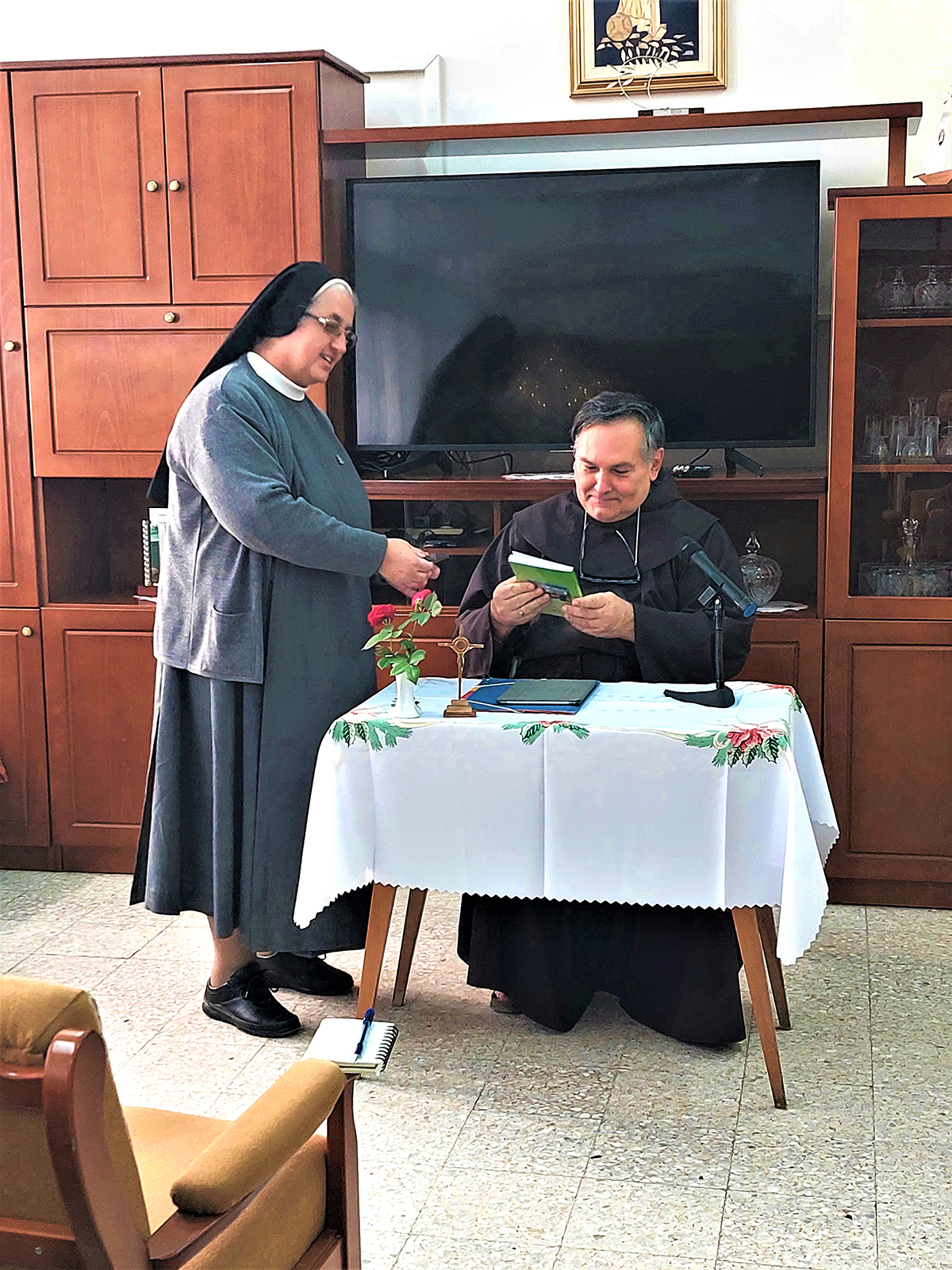
We were accompanied by Father Daris Schiopetto, who, introducing Psalm 23, invited us to leave behind the logic of the world, to 'enter' into the new day and 'stay' to breathe the logic of heaven, read the life with the eyes of God and become familiar with God.
In this time, the verb to sow sounds in particular. Sowing, synonymous with restoring, it is a word dear to our Franciscan identity. The speaker deepened the verb in the parable of the Sower in the Gospels (cf. Mt 13:1-23; Mk 4:1-20; Lk 8:4-15), in the Writings of Saint Francis and in the Guidelines of the XVI Provincial Chapter.
The first perspective is that of trust. The Sower sows the seed and entrusts it to God. In the act of sowing, man is a collaborator of God: he learns to sow, to defend the territory, to live with his neighbours. Sowing in human history, therefore, creates a real change of civilization.
Basic question. How can we, consecrated persons, propose ourselves in this liquid society, how can we follow the Lord? With Pope Francis, the Church reaffirms the new evangelization. The Pontiff emphasizes in Evangelii Gaudium no. 33: Pastoral care in a missionary key demand to abandon the convenient pastoral criterion of "it has always been so". I invite everyone to be bold and creative in this task of rethinking the goals, structures, style and methods of evangelization of their communities.
Another important perspective is to return to the Word of God and to exist in it, that is, to let ourselves be loved by God. Francis of Assisi exhorts in the Rule stamped on chap.6: And wherever the friars are and will be found, let them show themselves familiar with one another. And each one confidently manifests his needs to the other, "for if the mother nourishes and loves her carnal child, with how much more affection, one must love and nourish his spiritual brother? "
The Word needs the hand of the Sower, it falls into the ground and creates humbly the history, indicates the way, explodes in life and guards the beauty. The form of life of the brothers and sisters of the Third Order Regular of Saint Francis is this: observing the holy gospel of our Lord Jesus Christ (Rule TOR).
Thirdly, the Word is a guarantee of God’s Providence. The seed has some characteristics:
- Propagates the species (God gives with abundance).
- Survives in unfavourable conditions (needs time).
- It is capable of quiescence (it remains 'immobile' when the necessary conditions are lacking).
"Here it is, the Sower went out to sow" (Mt.13, 3). Let us focus our attention on some characteristics of the Sower:
- He operates in the naturalness of the things, in everyday life.
- He goes out with joy. He evangelizes in the street and welcomes everyone.
- He sows again in the Church, in the community, in the society and in the world, to do the Father’s will: "My food is to do the will of him who sent me" (Jn. 4:34).
- He sows in joy, in spite of adversity and circumstances: "If we suffer with patience and joy thinking of the sufferings of the blessed Christ and that only for his love we must bear, dear brother Leo, note that this is the perfect joy" (Fioretti, cap.XIII).
- It works in the synergy of the Trinity (the Father prepares the soil, the Son sows, the Holy Spirit makes the seed bear fruit).
- He works in humility. He lets himself be dependent.
Basic question. What does it mean to do the Father’s will, in my life, in fraternity, in society? "Whoever eats my flesh and drinks my blood remains in me and I remain in him" (Jn 6:56).
Later, Father Daris reflected on the theme of listening. There are five places to listen:
1. One’s own sensitivity. It must be set aside so as not to distort the Word.
2. Habit. The Word must be accepted with intensity, not out of habit.
3. Personal expectations (I tell the Word what I want).
4. The heart. The Word is welcomed into a purified heart.
5. Silence. The Word is welcomed in silence.
The road has a strong educational value as a place of encounter, sharing, mutual respect, civil rules and relationship. The road is also a place of degradation and of pollution. In this dynamic of factors, the Word descends and only if preserved, it bears fruit: "Mary kept all these things in her heart" (Lk 2:51).
Basic question. In what ways in my life, in the religious family, in the Church, does the Word descend?
Soil purification is another very important component. Benedict XVI explains in Deus caritas est no. 5: Yes, eros wants to lift us «in ecstasy» towards the Divine, to lead us beyond ourselves, but precisely for this, it requires a journey of ascent, renunciation, purification and healing. In the parable, the seed is called to persevere in the trials that are essentially three:
1. Inconstancy. The Word calls for a constant relationship with God.
2. Tribulation (threshing). It is meant to separate the good from the bad.
3. Persecution: closely linked to faith. "If anyone wants to come after me, deny yourself, take up his cross every day and follow me". (Lk 9:23)
The thorns in the parable (attractions, seductions, passions, temptations), have a very strong intensity on the person and can lead to death and woe to those who will die in mortal sins (Song of creatures). Tilling the soil to make it good and fertile is our primary task. For Francis of Assisi, the brothers are, to welcome Word. In Mary, the Poverello finds the model to welcome the Word, to guard it and to realize it in life.
- Hail, his vestment. clothe yourself with the Word
- Hail, your handmaid. serve the Word
- Hail, his mother. generate the Word in life
At the end of the Spiritual Exercises, Father Daris entrusted us with three key words: upright heart, to guard, to persevere. "Blessed are those who guard the Word of God with a whole and good heart and they produce fruit with perseverance" (cf. Lk 8:15).
During these days, we have heard the Word in Scripture, we have meditated and celebrated it in the Eucharist and we see words and reflections incarnated in a thousand gestures. Let us therefore, clothe ourselves with the Word, let us guard it, so that it may sprout in our lives and bear fruit, now one hundred, now sixty, now thirty. "Sleep or watch, night or day, the seed sprouts and grows; as, he himself does not know it" (cf. Mk 4:27).